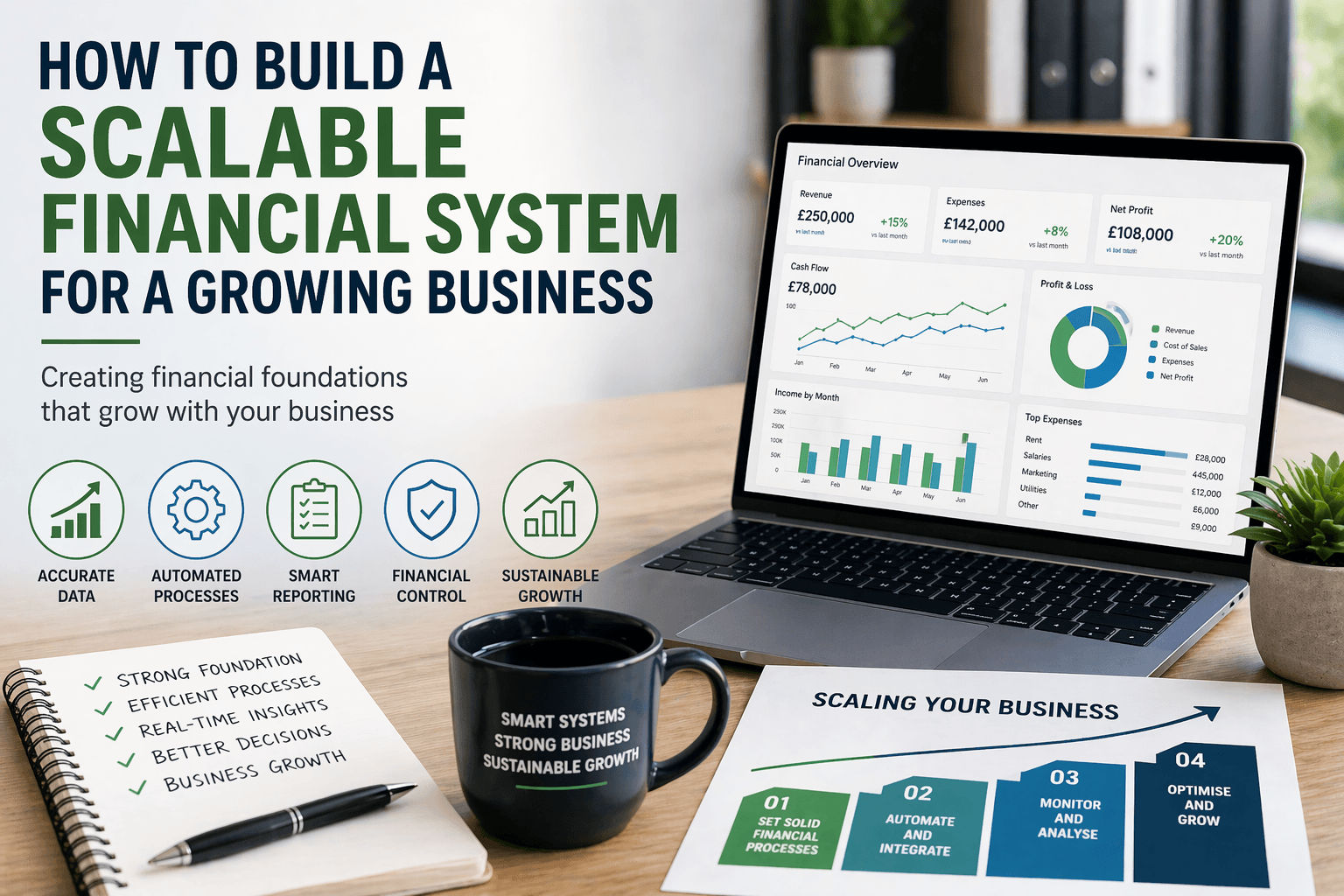
Creating financial foundations that grow with your business
As a business begins to grow, the financial systems that once worked perfectly can quickly become stretched, inefficient, and difficult to manage. What may have started as simple spreadsheets and occasional bookkeeping can turn into a disorganised and time-consuming process that holds your business back. Without a scalable financial system in place, growth can lead to confusion, missed opportunities, and costly mistakes.
A scalable financial system is designed to grow alongside your business. It ensures your finances remain organised, transparent, and easy to manage, no matter how complex your operations become. Building this type of system early can save time, reduce stress, and provide the clarity needed to make confident decisions.
What does a scalable financial system actually mean?
A scalable financial system is one that can handle increased activity without needing to be completely rebuilt. As your business expands—whether through higher sales, more employees, or additional services—your financial processes should continue to run smoothly.
This means having systems in place that can manage higher transaction volumes, provide accurate reporting, and adapt to changing business needs. Rather than reacting to growth, a scalable system prepares you for it.
Why growing businesses outgrow basic financial processes
In the early stages, many businesses rely on manual processes. While these can work initially, they often become inefficient as the business grows. More transactions mean more data to track, more invoices to manage, and more potential for errors.
Without structure, it becomes harder to see where your business stands financially. This lack of clarity can lead to poor decision-making, missed tax deadlines, and cash flow problems.
A scalable system removes these limitations by introducing consistency, automation, and better visibility.
The importance of clear financial visibility
As your business grows, having a clear understanding of your financial position becomes even more important. You need to know how much cash is available, where your money is being spent, and how your business is performing overall.
Good financial visibility allows you to identify trends, spot potential issues early, and make informed decisions. It also ensures you can meet your obligations to organisations such as HM Revenue & Customs without unnecessary stress or penalties.
Key components of a scalable financial system
Building a scalable system doesn’t have to be complicated, but it does require the right structure. One of the most important elements is reliable bookkeeping. Keeping accurate and up-to-date records ensures you always have a clear picture of your finances.
Automation is another key factor. Using accounting software to handle tasks such as invoicing, expense tracking, and reporting can save time and reduce the risk of errors.
You should also establish consistent processes for managing income and expenses. This creates a routine that keeps your finances organised and easy to manage, even as your workload increases.
How automation can support business growth
Automation plays a major role in scalability. As your business grows, manually handling every financial task becomes unrealistic. Automated systems can process transactions, generate reports, and track performance in real time.
This not only improves efficiency but also frees up time for business owners to focus on growth rather than administration. With the right tools in place, your financial system becomes a support for expansion rather than a barrier.
Preparing your finances for future expansion
A scalable financial system should always be forward-thinking. It should allow for growth without requiring constant changes or upgrades. This means choosing tools and processes that can adapt as your business evolves.
Planning ahead also involves setting clear financial goals and regularly reviewing your performance. By doing this, you can ensure your system continues to meet your needs as your business develops.
Avoiding common mistakes when scaling your finances
One of the most common mistakes businesses make is waiting too long to improve their financial systems. By the time problems become obvious, they are often more difficult and costly to fix.
Another mistake is relying too heavily on manual processes. While they may seem manageable at first, they quickly become inefficient as the business grows.
Failing to seek professional advice can also limit your ability to build a truly scalable system. An experienced accountant or bookkeeper can help ensure your processes are set up correctly from the start.
Building a strong financial foundation for long-term success
A scalable financial system is more than just a convenience—it’s a necessity for long-term growth. It provides the structure, clarity, and efficiency needed to support your business as it expands.
By investing in the right systems and processes early, you can avoid common pitfalls and create a solid foundation for future success. This allows you to focus on growing your business with confidence, knowing your finances are under control.